
撕裂人
The Color of Death: Legacy of Agent Orange Still Plagues Vietnam After Decades of Peace_我的网站

A |
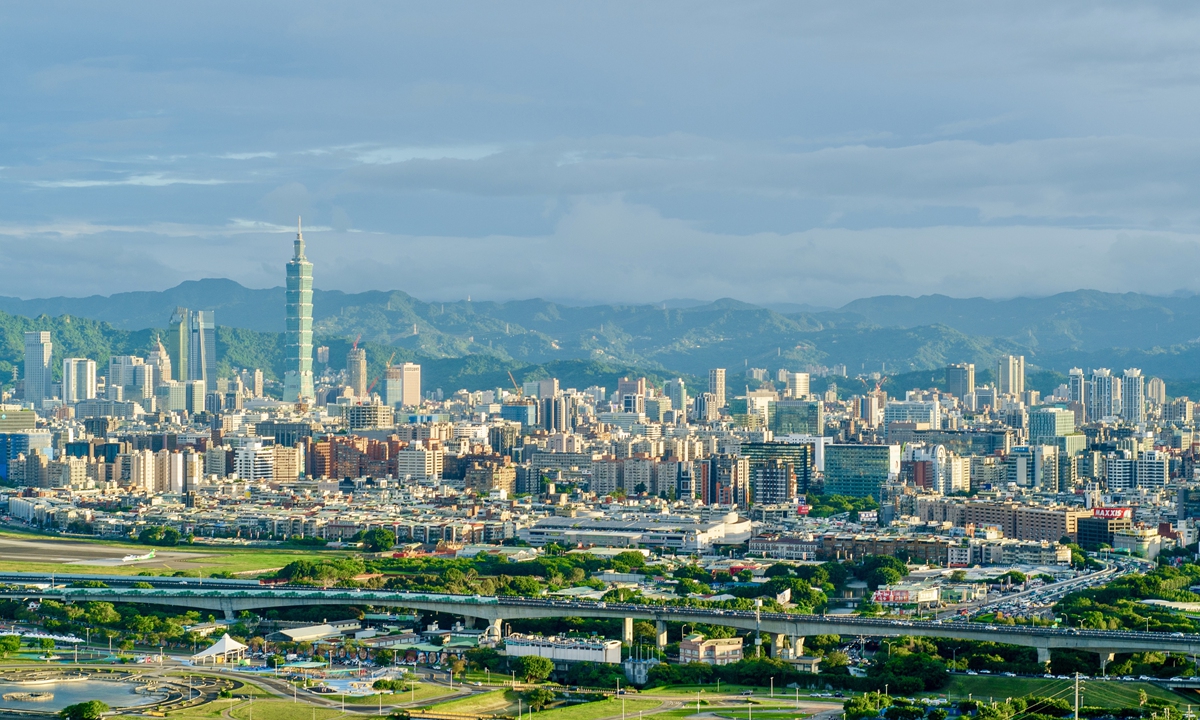
At 2:30 pm on Thursday, Taipei resident Michael Chou received a mobile alert, stating that due to "simulated air attack on communications infrastructure," mobile network access would be affected.
It turned out to be a mobile internet disruption drill in the northern part of the Taiwan island. As part of the Democratic Progressive Party (DPP) authorities' "urban resilience drill," the exercise was designed to simulate scenarios of limited communication resources amid major disasters or wartime conditions and verify public‑service backup capabilities, according to Taiwan-based media.
Yet in the view of observers, this performative farce not only disrupts residents' daily lives, but also acts as a tool for DPP authorities to hype up crises and amplify cross‑Straits confrontation. It essentially serves their scheme of "seeking independence by force" and narrow‑minded electoral interests.
As reported by udn.com, the exercise ran from 2:30 pm to 3 pm. When the alert was triggered, local police diverted pedestrians and vehicles to the roadside and urged the public to take shelter indoors. With mobile network speeds throttled, most people at the site lost mobile internet access; many waited out the drill indoors with available Wi‑fi and passed the time by chatting or reading.
Chou told the Global Times that 4G and 5G connections were heavily throttled during the drill, though Wi‑Fi and text messaging still worked. Even so, the exercise has created real‑world inconveniences, disrupting takeout delivery, transport‑related ticketing and outdoor emergency rescue services.
Local legislator Ko Ju-chun from the Chinese Kuomintang party was also among those opposing the drill. He accused the DPP for abusing emergency alerts which only exposed the public to inconvenience. He noted that a genuine network‑resilience drill should focus on "how the public obtain information after networks go down," yet local people still had no clear idea how to respond in such circumstances, per Taiwan-based media.
"The so‑called mobile internet disruption drill has very limited practical combat value. And if a military conflict breaks out across the Taiwan Straits, the real‑world scenario would be far more complex than the DPP authorities have envisioned, with much higher costs to bear," Zhang Wensheng, a deputy dean and a professor at the Taiwan Research Institute at Xiamen University, told the Global Times.
"The DPP authorities want the drill to stoke tensions, drumming up public backing for its combative defense policies and higher military budgets. Yet it fears over‑hyping the specter of war would disrupt daily life and erode its popular support, hence this superficial, showpiece drill," said the expert.
According to Zhang, the DPP authorities also intend to test Taiwan residents' tolerance threshold. It seeks to observe whether the public will passively acquiesce or push back strongly, so as to assess the mobilization effect of its narratives of "resisting mainland to protect Taiwan" and "rejecting reunification by force."
Prior to the mobile internet disruption drill in northern parts of Taiwan island, seven counties and cities in the central Taiwan region held the same drill on Monday afternoon.
Many residents have questioned why the southern region was exempt. DPP officials claimed southern Taiwan had suffered real‑life communication outages in past years and that a drill in the southern part of the island scheduled to take place at 10 am, when the Stock Exchange of Taiwan region is open, could disrupt real-time stock transactions.
"This drill is utterly absurd," Chou said, "The DPP probably figures that if anything goes wrong in central and northern Taiwan, it does not matter, local mayors would take the blame."
Echoing Chou, Zhang said that the DPP authorities do not want drill‑related disruptions to harm their core support base in southern Taiwan, particularly Tainan and Kaohsiung. By contrast, jurisdictions across central and northern Taiwan include many areas ruled by the KMT, which are being used as test subjects for the exercise.
By striking a posture of "combat readiness," hyping up cross‑Straits confrontation and ramping up ideological mobilization, the DPP aims to serve its interests in the year‑end local elections, he added.
"However, voters always pay more attention to livelihoods, the economy and governance performance in local election. If DPP's political manipulation go too far, it will backfire," Zhang said. "The overwhelming majority of Taiwan compatriots refuse to become cannon‑fodder for secessionists."
The DPP authorities do not hesitate to use the well‑being of Taiwan residents and cross‑Straits peace and stability as bargaining chips for their own political interests, fully laying bare its true colors as a troublemaker, the expert warned.
。 On August 10, 1961, American forces for the first time spayed Agent Orange in Vietnam as part of its herbicidal warfare program, Operation Ranch Hand.,Here’s a closer look into this highly toxic defoliant chemical, the use of which by the US military during the 1955-1975 Vietnam War resulted in up to one million people being disabled, according to the Red Cross of Vietnam’s estimates.,What is Agent Orange?,The defoliant derived its name from the color of the orange-striped US gallon barrels in which the chemical was shipped and stored.,It was created in 1940 and used in the United States as an agricultural defoliant, as it had the ability to kill some plants while leaving others unaffected.,Using the Defense Production Act of 1950, the US government prodded several American companies to make Agent Orange for military use. A 50:50 mixture of the herbicides 2,4,5-T and 2,4-D, the defoliant contains an extremely toxic dioxin compound.,Effects of Agent Orange,A 50:50 mixture of the 2,4,5-Trichlorophenoxyacetic acid and 2,4-Dichlorophenoxyacetic acid, Agent Orange contains the Tetrachlorodibenzo-p-dioxin, or TCDD, the most toxic of the dioxins, classified as a human carcinogen by the US Environmental Protection Agency.,Even short-term exposure to TCDD can cause cancer, liver problems and a severe acne-like skin disease, known as chloracne. The dioxin is also linked to type 2 diabetes, immune system dysfunction, nerve disorders, muscular dysfunction, hormone disruption and heart disease.,Additionally, the chemical can cause miscarriages, spina bifida and other problems with fetal brain and nervous system development.,Use of Agent Orange in Vietnam,During the 1955-1975 Vietnam war, the first US defoliation missions were launched near the Vietnamese village of Dak To in 1961.,The goal was to remove cover and concealment used by the Viet Cong and North Vietnamese Army, so as to reveal hidden bases, communications centers and potential targets, and to improve visibility in tracking troop movements.,More than 13 million gallons (about 59 million liters) of Agent Orange was used by the US military in Vietnam, or almost two-thirds of the total amount of herbicides used during the entire Vietnam War.,The chemical was available in slightly different mixtures, sometimes referred to as Agent Orange I, Agent Orange II, Agent Orange III and “Super Orange”.,End of Agent Orange?,In 1969, the American Association for the Advancement of Science (AAAS) urged the Pentagon to end its use of herbicides containing dioxin, specifically Agent Orange, something that the Department of Defense (DoD) eventually did.,Even so, the defoliation campaign continued, with the US military switching to Agent White, a chemical herbicide that did not contain the dioxin contaminant.,In May 1970, the US Air Force (USAF) flew its last defoliation mission, and almost a year later, the DoD announced that all crop destruction missions would also cease.,The remaining 2.22 million gallons of Agent Orange were moved by the USAF to Johnston Island Atoll in the South Pacific, where they were incinerated.,Legacy,The Vietnamese government said that up to four million people in the country were exposed to Agent Orange, and as many as three million people had suffered illness because of the defoliant.,The Vietnam Red Cross in turn pointed out that the defoliant had affected at least 150,000 children, and that babies in Vietnam are still being born with birth defects due to Agent Orange. In this regard, numerous studies revealed that dioxin levels are still in place in the blood samples of the citizens of both North and South Vietnam.,The chemical also caused immense environmental damage in Vietnam, with more than 3,100,000 hectares (31,000 km2) of forest being defoliated ( for comparison's sake, Taiwan measures 36,197 km2).,Opinion & AnalysisAnniversary of Agent Orange Disaster: Only United Can We Relieve the Suffering of Many Generations10:21 GMT,Agent Orange-related issues also emerged in the US after an increasing number of returning Vietnam veterans and their families began to report a range of health problems, including skin irritations, miscarriages, psychological symptoms, type 2 diabetes, birth defects in children and cancers such as Hodgkin’s disease, prostate cancer and leukemia.,1979 saw a class action lawsuit filed on behalf of 2.4 million US veterans, who were exposed to Agent Orange during their service in Vietnam. In 1984, seven major US chemical companies that manufactured the defoliant agreed to pay $180 million in damages to the veterans or their next of kin.,Vietnam War,The 1955-1975 Vietnam War, which involved Laos and Cambodia, pitted communist North Vietnam and the Viet Cong revolutionary organization against South Vietnam, supported by Washington.,Preconditions for the war pertained to the desire of North Vietnam, which defeated the French colonial administration in 1954, to unify the entire country under a single communist authority, like in the Soviet Union or China. The South Vietnamese government, for its part, sought to preserve a Vietnam more closely aligned with the West.,The US was concerned over the spread of communism to South Vietnam and then to the rest of Asia, which prompted Washington to end money, supplies and military advisers to help the South Vietnamese government.,On August 2, 1964, North Vietnamese boats attacked a US Navy destroyer, the USS Maddox, patrolling in the Gulf of Tonkin near Vietnam, in what was used by the White House as a pretext to escalate the war and send American combat units to the South East Asian country. However, the US costs and casualties in the war prompted Washington to withdraw American troops by 1973, and a couple of years later, South Vietnam fell to a full-scale invasion by the North.,An array of war crimes was committed by the US military during the war, including the My Lai massacre, in which up to 504 unarmed South Vietnamese civilians, including women, children, and infants, were killed by US Army soldiers on March 16, 1968.,Another war crime pertains to Operation Speedy Express, conducted by the US Army in Vietnam’s Mekong Delta between December 1968 and May 1969 as part of the American military’s effort to pacify the Viet Cong. The operation led to 5,000 to 7,000 casualties who were reported to have been civilians.。
Current article:http://2ervllo.chengjuecannaobianmouqueduoyu.shop/list_ia4/yrh6.html
Published on:08:43:10
 A股周五延续涨势 贵金属板块走强,A股周五延续涨势 贵金属板块走强
 雷军:小米YU7售价不可能是网传的23.59万元 小米汽车今年将盈利
 台风“沙德尔”或于27日至28日登陆闽浙!福建部分地区停航
 擅自盗伐4棵杨树男子被判缓刑还要补种树木20株_郑某_五台县
 郑建邦率队到河北调研
 Token工厂、世界模型、AI手机,WAIC的三大新风向
我的网站最新内容
- ·预计2028年建成!国际零磁谷这一重点项目开工
- ·广州黄埔:助力建设“三城一岛” 共治共享宜居宜业宜游城市
- ·西部黄金:聘任孙树臣为副总经理
- ·英特尔高级副总裁桑德拉·里维拉:2020年大量5G终端上市
- ·小米玄戒O3亮相 安兔兔跑分突破522万分登顶安卓阵营
- ·《夺命邮差2 Redux》众筹成功,确认将于 2027 年第一季度登陆 PC、PS4、PS5 及 VR 平台
- ·梅州彩民喜中“好运百万”一等奖
- ·现代汽车全球COO称将与使用童工的美国供应商“断绝关系”
- ·关于网易考拉假货销售跟进的问题:加拿大鹅的第二封邮件回复是假的
- ·“安心购彩守护行动”亮相湖北省公开水域游泳比赛黄石站
- ·《GTA6》全新泄露来袭!玩家:怎么全是老人和胖子
- ·财政部第二次续发行2026年记账式附息(十三期)国债
- ·井松智能:公司合并报表口径计提资产减值准备共计约630万元
- ·机器人的“试用期”结束了?
- ·好吃好玩好看,新加坡土生文化馆邀你一起共度仲夏夜艺术节
- ·伊朗与阿曼拟建立霍尔木兹海峡安全海上通道;消息人士称“伊朗希望通过巴基斯坦向美方转达谈判条件”
我的网站热点内容
- ·令和ロマン・髙比良くるま 熱愛報道後連絡してきたピン芸人明かす「今度みんなで飯行こうって来た」
- ·Scholars’ Perspectives: National support, optimized evaluation allow young talent to pursue long-term breakthroughs: researcher
- ·【慧爱教育】“衣衣”相伴——道滘镇中心幼儿园小一班课程故事
- ·化工板块猛攻,锂电、钾肥龙头齐涨!海外储能订单爆发,下半年量价修复空间打开?
- ·河北、山东市场钢厂上调焦炭采购价
- ·飛翼有力折服暴風
- ·新动能激活国内生产,不断拓展海外市场新空间
- ·三星Note 8 Android Pie Beta更新支持夜间模式
- ·2026杭州股票开户本地办理指南:时效规则与成本优化技巧
- ·擘画上合发展蓝图 共促地区繁荣稳定——写在习近平主席即将出席上海合作组织成员国元首理事会第二十二次会议并对哈萨克斯坦、乌兹别克斯坦进行国事访问之际_中国_精神
- ·小鹏G7将于7月3日上市 预售价23.58万元 CLTC纯电续航702km
- ·我打不了伊朗,还打不了你?三名美军衰败的吹哨人被开除!,天鹰观察,我打不了伊朗,还打不了你?三名美军衰败的吹哨人被开除!
- ·小学数学试卷“难出天际”?!看完题目,老师也不淡定了……
- ·【观点】南华期货:沥青低供应低库存支撑,近月上行动能受限
- ·中网优能(北京)技术有限公司 通过广告诱导付款
- ·本周国内豆粕现货价格下跌